

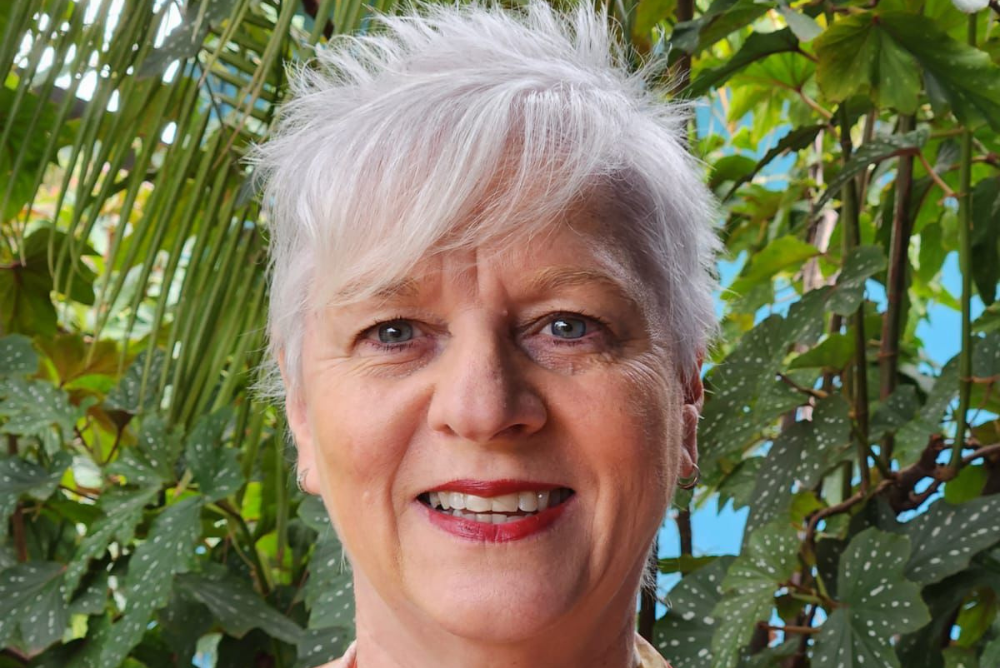
It is with deep sorrow that we bid farewell to Marcela Bobatto, pediatrician and neural therapist, social leader, and tireless promoter of public health, primary health care, and popular culture.
Marcela was born on December 27, 1961, in the province of Santa Fe. She studied at the Sagrado Corazón de Jesús School and then at the National University of Rosario, where she graduated as a pediatrician. During her training, she was inspired by liberation theology, the preferential option for the poor, and Freirean popular education as a way to transform reality.
In the 1990s, she worked as a doctor at the Pediatric Hospital and in health centers in low-income neighborhoods of Posadas. Faced with a threat of cholera in the community, she promoted the community theater group “La Murga de la Gotita.” That was the beginning of many years dedicated to popular art as a tool for community communication, transformation, and joy. https://www.altaalegremia.com.ar/contenidos/gacetilla_n_364.html
In 1990, in Posadas, Misiones, she was one of the 25 women who founded the National and Latin American Health Movement LAICRIMPO, a critical and anti-hegemonic movement that dared to dream that another kind of health and another world were possible. https://www.laicrimposalud.com/Historia-del-Laicrimpo
In Posadas, she met Gerardo Segovia, with whom she decided to move to Eldorado, Misiones, near the Iguazú Falls. There she continued her commitment to public health, working in primary care centers, with recognized union and political activism, and always contributing to community art.
In October 2002, together with Gerardo and other colleagues, she founded the community theater group “La Murga del Tomate,” a cultural offshoot of the Misiones Organic Agriculture Network (RAOM). From the beginning, the murga sought to “promote an alternative model of life” based on agroecology, health, and the defense of common goods.
In her increasingly deep involvement in the Laicrimpo Health Movement, she worked to recover and disseminate the worldview and wisdom of indigenous peoples, medicinal plants, and healthy eating understood from the perspective of food sovereignty. Together with other teachers and Julio Monsalvo, they systematized more than 300 healthy practices of the peoples.
They explored the idea that health can only exist if it is in the hands of the community, within the network of networks, and that health is not a commodity subject to capital or the pharmaceutical industry.
LAICRIMPO has been part of the People's Health Movement (PHM) since its inception. Julio Monsalvo participated in the First Peoples' Health Assembly in Savar, Bangladesh, in December 2000, and upon his return, he promoted the Bangladesh Declaration and the struggle for health for all.
For several years, Marcela was one of the coordinators of the MSP in Latin America, serving on the global MSP Steering Committee.
After attending an MSPLA assembly in Guatemala, Marcela was deeply impressed by the worldview of the Maya people, and from there also by the worldview of the Guaraní and other peoples of Abya Yala. She understood more clearly that “we are nature”: we are water, wind, mountains, earth, and fire, and that political education must also include spirituality. She studied in depth the contributions of different peoples to the concept of “Welbeing” and, together with others, drafted a key document for MSPLA on this counter-hegemonic thinking, rooted in Latin American practices.
As coordinator of the southern sub-region of Latin America, Marcela participated in several meetings at the global level and also in our region, fighting hard to highlight ancestral knowledge in a relationship of equity with the other thematic circles and pillars of our movement. The effort she undertook together with her colleague from the southern coordination (Sandra Marin) and two colleagues from Mesoamerica (Gabriel García and Hugo Icu) allowed them to consistently support the profound and comprehensive vision that our peoples have of life and health, to the point of achieving its inclusion as a theme in the fifth assembly.
In recent years, Marcela also became a leading figure in Neural Therapy Medicine in Argentina and Latin America. Not only did she teach many young doctors, but she also promoted the incorporation and accessibility of this medicine within the public health system, ensuring its presence in a health center so that it could reach everyone and not be reserved for a select few. Her last great dream came true with the creation of the Diploma in Neural Therapy Medicine at the Public University, in the Faculty of Medicine of Mar del Plata.
Marcela contributed to writing a chapter of 7th Global Health Watch. She also contributed to the brochure “The Struggle for Health,” published in English in 2018, whose authors were Amit Sengupta, Chiara Bodini, and Sebastián Franco.
Her last contribution to the MSP was her participation in Sri Lanka, at the 3rd Global Forum on Food Sovereignty Nyéléni 3, where she coordinated the Forum's health care.
Marcela struggled for women's rights, and we remember the words of Tina Alfaro from Costa Rica: "I will never forget the lesson on gender she gave at the presentation of Breilh's book, where the panel was made up of only men and she arrived and, without saying a word, pulled up a chair and sat down, then said, 'here, never a table without a woman. This happened at the Fifth World Assembly for People's Health in Mar del Plata, Argentina.
Her commitment, clarity, and example will continue to guide and inspire those of us who believe in a more just, supportive, and humane society.
We stand with her children Martín, Victoria, and Francisco; her life partner Gerardo; and all those who shared her journey in this painful departure.
Marcela, Hasta la victoria se la Vida, ¡siempre!