
International Women's Day: intensifying global challenges
As many of you prepare to mark International Women’s Day (March 8) across different regions and contexts, we recognise that this moment arrives amid intensifying global challenges. The growing anti-gender discourse continues to shape policies, public narratives, and funding priorities in ways that directly threaten sexual and reproductive health and rights (SRHR).
Across many parts of the world including contexts of war, occupation, and conflict such as Gaza, Sudan, and numerous other regions — women and young women are experiencing profound and layered forms of violence, displacement, and deprivation. Their access to health care, nutrition, safety, livelihoods, and basic dignity is being severely undermined. At the same time, women’s rights are increasingly precarious for migrants, refugees, and women in informal and labour-intensive sectors, where exploitation, insecurity, and limited access to services remain widespread.
These realities intersect with ongoing challenges around maternal health, access to contraception and abortion, discrimination against LGBTI persons, the stigmatisation of disability, and persistent discriminatory practices targeting marginalised and racialised women’s bodies. These pressures are unfolding alongside drastic cuts to foreign aid and worsening humanitarian crises, with long-term consequences for health justice.
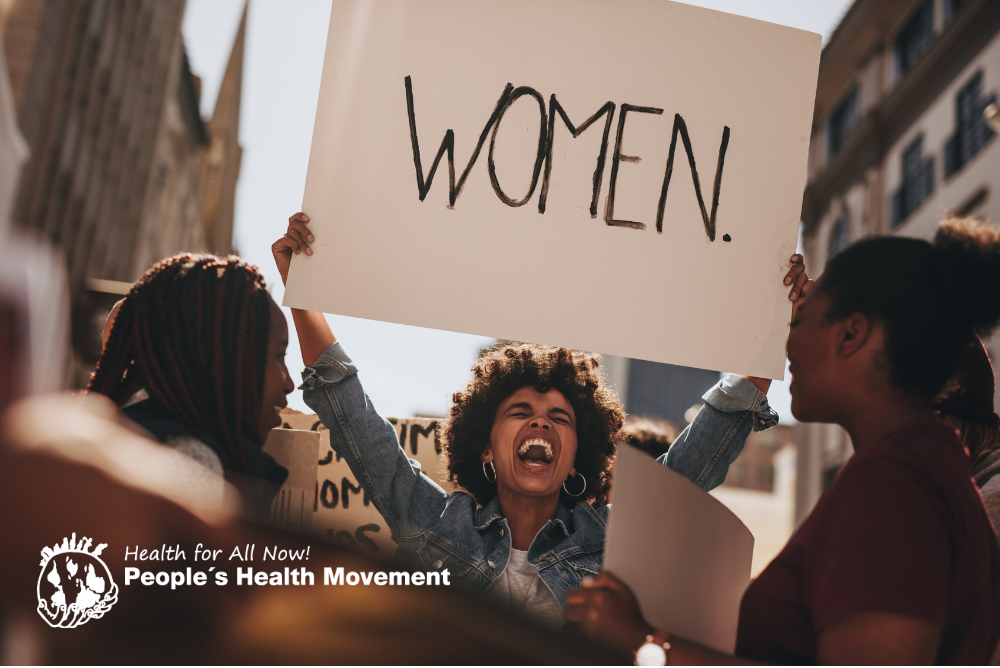
We encourage activists around the world, PHM regional, country, and thematic coordinators, people who identify with gender justice and equality, to raise our voices, to contribute a short audio/video message, posters, or brief statements. This may include marches, posters, webinars, public meetings, campaigns, or other collective actions. Contributions can be in your local language and on the issues which you have been focussing on. Share your messages and actions on social media. Together we are stronger and louder.