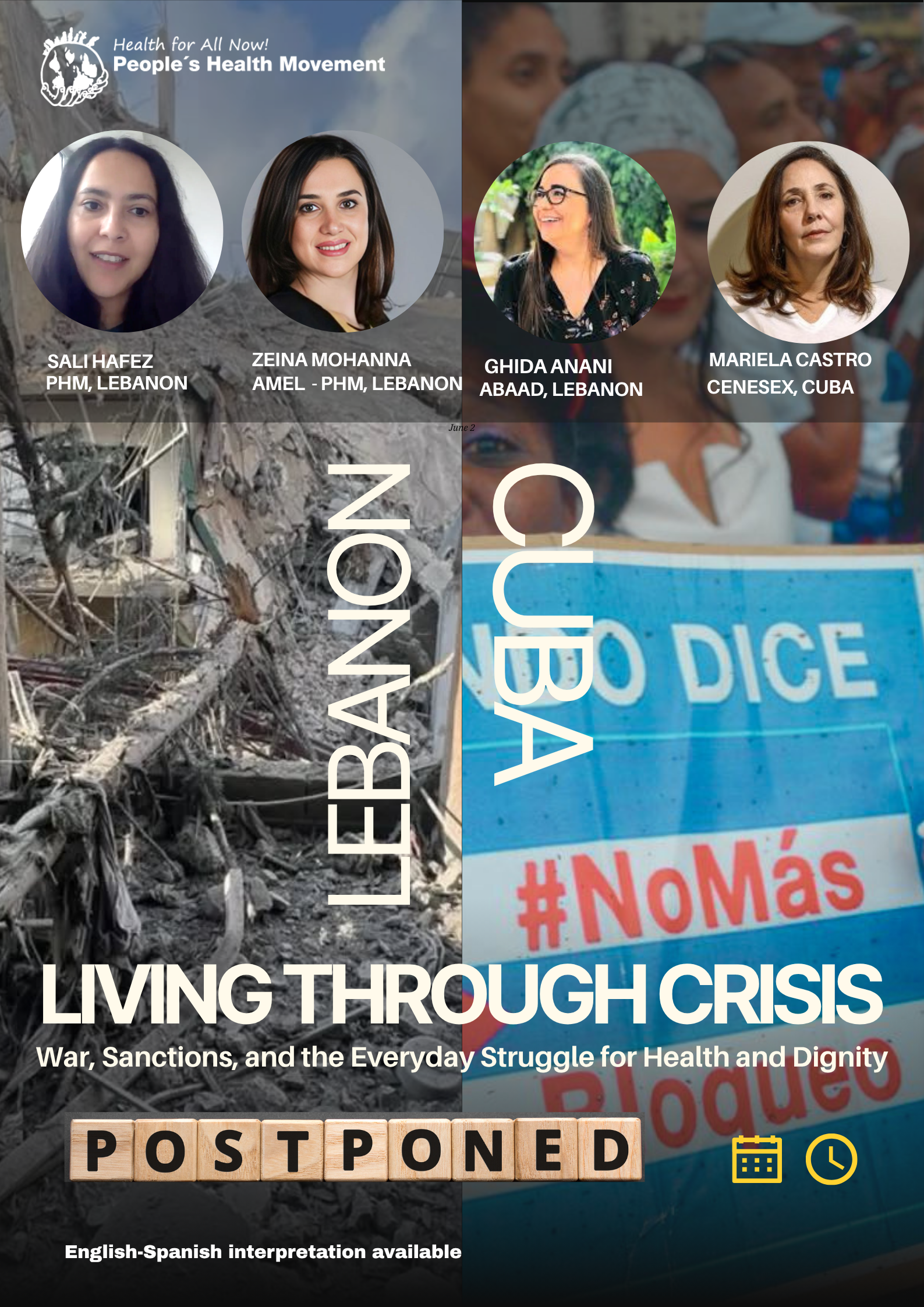

Webinar: Living Through Crisis: War, Sanctions, and the Everyday Struggle for Health and Dignity
The People's Health Movement (PHM) invites you to a new session in our webinar series to discuss the situation of the right to health and its impact on communities in contexts of conflict and blockade, with a close look at Lebanon and Cuba. Join us.
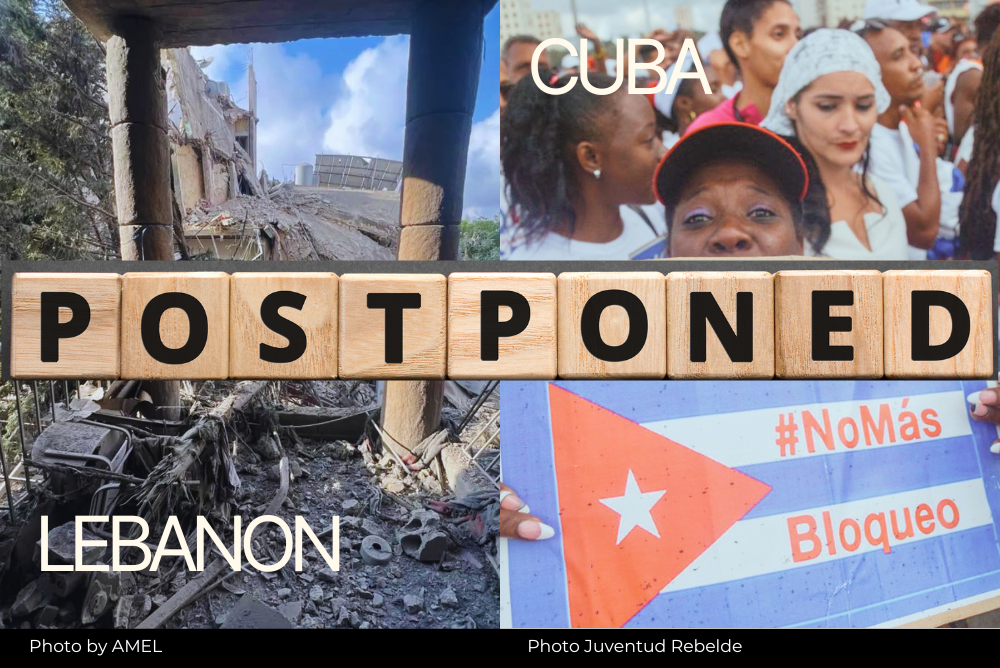
The webinar has been postponed until further notice
Speakers:
Mariela Castro, CENESEX, Cuba
Ghida Anani, ABAAD, Lebanon
Zeina Mohanna, Amel Association, PHM, Lebanon
Moderator: Sali Hafez
English - Spanish interpretation available
The webinar seeks to draw attention to the devastating impacts of war, occupation, sanctions, and economic pressures on everyday life, We will be particularly looking at Lebanon and Cuba. Lebanon is living through an escalating catastrophe: relentless bombardment, mass displacement, the systematic destruction of hospitals and health infrastructure, and a healthcare system pushed to the edge of collapse. Over a million people have been displaced. Health workers have been killed. Supply chains for medicines and medical equipment have been severed.
And yet, from outside Lebanon, what filters through are headlines and casualty figures — rarely the texture of daily life under occupation and bombardment: the fear that does not lift,, and the exhaustion of communities trying to hold themselves together under unrelenting violence. The voices of those working on the ground—particularly on gender, sexual and reproductive health, and mental health—are almost entirely invisible.
Similarly, the impact of sanctions is often less visible, unfolding quietly through medicine shortages, healthcare disruptions, rising economic distress, deteriorating mental health, and the weakening of social support systems. Women, young people, LGBTQ+ communities, and other marginalized groups frequently bear these burdens most deeply.
Cuba is living under one of the longest and most comprehensive economic blockades in modern history — over six decades of US sanctions that have systematically restricted access to medicines, medical equipment, food, and fuel.
In recent years, the situation has intensified sharply: power outages lasting many hours a day, severe food shortages, and the collapse of basic services have accelerated migration and deepened social distress. The impact on mental health, on women, and on LGBTQ+ communities—who had made significant gains—has been profound.
Lebanon has been living through an escalating catastrophe: relentless bombardment, mass displacement, the systematic destruction of hospitals and health infrastructure, and a healthcare system pushed to the edge of collapse. Over a million people have been displaced. Entire communities in the south and in the Bekaa have been bombed repeatedly. Health workers have been killed. Supply chains for medicines and medical equipment have been severed.
And yet, from outside Lebanon, what filters through are headlines and casualty figures — rarely the texture of daily life under occupation and bombardment: the fear that does not lift, the grief that has no space, the exhaustion of communities trying to hold themselves together under conditions of unrelenting violence. The voices of those working on the ground — particularly on gender, sexual and reproductive health, and mental health — are almost entirely absent from global public health conversations.
For PHM, these are not distant political questions. They are urgent and deeply human realities. We feel it is crucial that the voices of those working on the ground,challenging the silence, invisibility, and lived realities are heard directly from those experiencing and resisting them.