PHM Exchange: Issue #8- May 2025 |
Español abajo Revolutionary greetings {{ FirstName | commonize | default: 'Friends' }}, Welcome to the new edition of PHM Exchange- a newsletter from the People's Health Movement. PHM exchange is sent to our activists and colleagues who have joined us over the last 25 years!! We bring to you news from our PHM country circles and networks from around the world. If you have any news/events to share please share via replying to this email or email to (mediaphm@phmovement.org) with the subject line "For PHM Exchange" in not more than 100-150 words & hyperlink (if available) and we will consider circulating it in our next newsletter!! To subscribe yourself to this newsletter click below and share with friend. https://actionnetwork.org/forms/sign-up-for-news-and-updates-from-the-peoples-health-movement To unsubscribe, or update your information, check the end of this email. |
1. Aziz Rhali with the North African land convoy to Gaza |
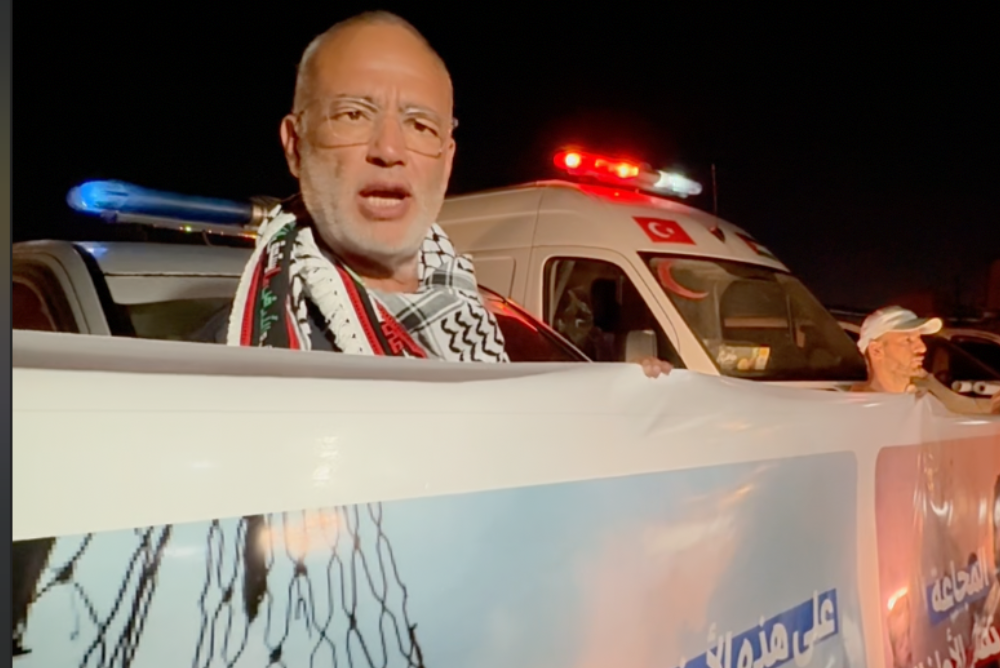
Our Global Coordinator Aziz Rhali is currently coordinating a team of medics moving from countries in the Maghreb region (Mauritania, Algeria, Tunisia, Libya, and Egypt) towards Gaza. Aziz, who is also a member of the Board of Directors of the Global Sumud Flotilla, along with other medics, is part of the land convoy heading to Rafah (the Gaza border) to break the siege and deliver essential aid and services. The land convoy is being coordinated in parallel with the sea convoy to Gaza. The last time we spoke with Aziz on 11th May 2026, the land convoy team had set up tents in Libya. See more: https://www.instagram.com/reels/DYUevEksHRR/ |
2. PHM at the 79th World Health Assembly (WHA) |
It’s time for the 79th World Health Assembly (WHA). The annual assembly convenes WHO Member States to set global health policies and budgets. WHA79 this year will focus on issues such as health financing, digital health, and climate change. Join PHM’s Team of Watchers and follow the discussions at WHA79, scheduled for 18–23 May 2026 in Geneva, Switzerland. Check updates here: PHM WHA79 Updates Meanwhile, the Watchers’ Team in Geneva has written an informative article on WHO’s new “Economics of Health for All”. Check towards the end of the English section. |
3. PHM Nepal established new Student Circle at Chitwan Medical College |
PHM Nepal has established a new PHM Nepal Student Circle at Chitwan Medical College. A sharing programme was organised on 22 April in Chitwan District, Nepal, in collaboration with Chitwan Medical College. There were around 70 participants, including health students, faculty members, and others. The programme was divided into two parts. The first half featured a sharing session about PHM, including its historical background, organisational structure, and actions across different health sectors. The second part focused on discussions around the newly established student circle—its relevance, structure, and potential activities. Participants were highly inspired to engage in PHM activities. This circle is one of the outcomes of the Nepal People’s Health University (NPHU) held last year. One of the participants of NPHU Nepal was a faculty member from Chitwan Medical College who took this initiative. |
4. Two statements by PHM Argentina |
People's Health Movement Argentina opposes proposed changes to Argentina’s Glacier Law People's Health Movement Argentina strongly opposes proposed changes to Argentina’s Glacier Law, arguing that they weaken environmental protections and allow harmful extractive activities like mining in glacier regions. It warns that this threatens water sources, ecosystems, and the right to water, especially during the climate crisis and growing water scarcity. The movement links these reforms to corporate exploitation, loss of national sovereignty, and wider patterns of environmental injustice. It also criticizes the involvement of the Israeli water company Mekorot, accusing it of complicity in denying Palestinians access to water. Read more: https://docs.google.com/document/d/1RoBuCs31PoVrhJr9Dxx9kb9U_zc0pgQc/edit?usp=drive_link&ouid=114742663530310613789&rtpof=true&sd=true Tourism, Extractivism, and the Struggle for Mapuche Territory The People's Health Movement Argentina condemns the violence and intimidation faced by Mapuche communities in San Martín de los Andes who are defending Chapelco Mountain and their ancestral lands. Decades of extractive tourism have damaged biodiversity, water sources, and the ecological balance essential to Mapuche life and health. It criticizes companies and local governments for treating the territory as an economic resource while leaving environmental destruction and water scarcity behind. It expresses solidarity with their resistance and calls for the protection of Wallmapu, the ancestral Mapuche territory, and the defense of life and environmental integrity. Read more: https://docs.google.com/document/d/12xFIEuhHP_OmI5uh5HSvTxrNAPLFbMnE/edit?usp=drive_link&ouid=114742663530310613789&rtpof=true&sd=true |
5. End Medical Complicity: Boycott the Israeli Medical Association |
PHM’s campaign page calling for the suspension of the Israeli Medical Association from the World Medical Association is now live. This campaign is being jointly undertaken with Doctors for Gaza / Artsen voor Gaza and the Health Advisory Council of Jewish Voice for Peace (JVP-HAC). If you would like to join the campaign, connect with others in your country, or get involved in the working group, reach out to us at: [email protected] Read more: https://phmovement.org/end-medical-complicity |
6. Webinar by PHM East and Asia Pacific: “US Bases- protection or infection?” |
The attacks led by US-Israel in the Middle East, especially in Iran, Lebanon and Palestine has led to massive destruction in the Middle East, but also shaken the world, through the oil and energy crisis following in its wake. And the fear of the general public now is – with the ongoing conflict, and the US aggression in Latin America, who is next? Though a good distance from the heart of the conflict, the Asia Pacific has always been a venue for tactical maneuvering by imperialist Powers – particularly, the United States. Just in the Indopacific territories alone are numerous military bases controlled by the United States. They are used for monitoring the region, as strategic locations for supply refills, docking areas for their troops, and possibly launching pads for using force against others… Webinar date & time: May 20, 2026, 10:00AM – 11:30PM UTC (6:00 to 7:30 PM Singapore time, 8PM to 9.30PM Melbourne time, 3:30 PM to 5 PM India time) Zoom Registration: https://us06web.zoom.us/webinar/register/WN_th_lHLl6Spam7mQcZd8agw Read more: https://phmovement.org/webinar-us-bases-protection-or-infection |
7. “Medicine shortages and the political—and electoral—struggle in Colombia” |
Sharing this article by Jennifer Cardona, PHM Colombia coordinator and PHM Steering Council member. The article argues that medicine shortages in Colombia are political as well as logistical problems. It says the shortages are linked to conflicts over healthcare reform proposed by President Gustavo Petro. The authors argue that private healthcare and pharmaceutical interests resist reforms that would strengthen public control and universal access. Overall, the article presents the crisis as part of a broader struggle over whether healthcare should function as a public right or a market-driven system Read more: https://phmovement.org/medicine-shortages-and-political-and-electoral-struggle-colombia |
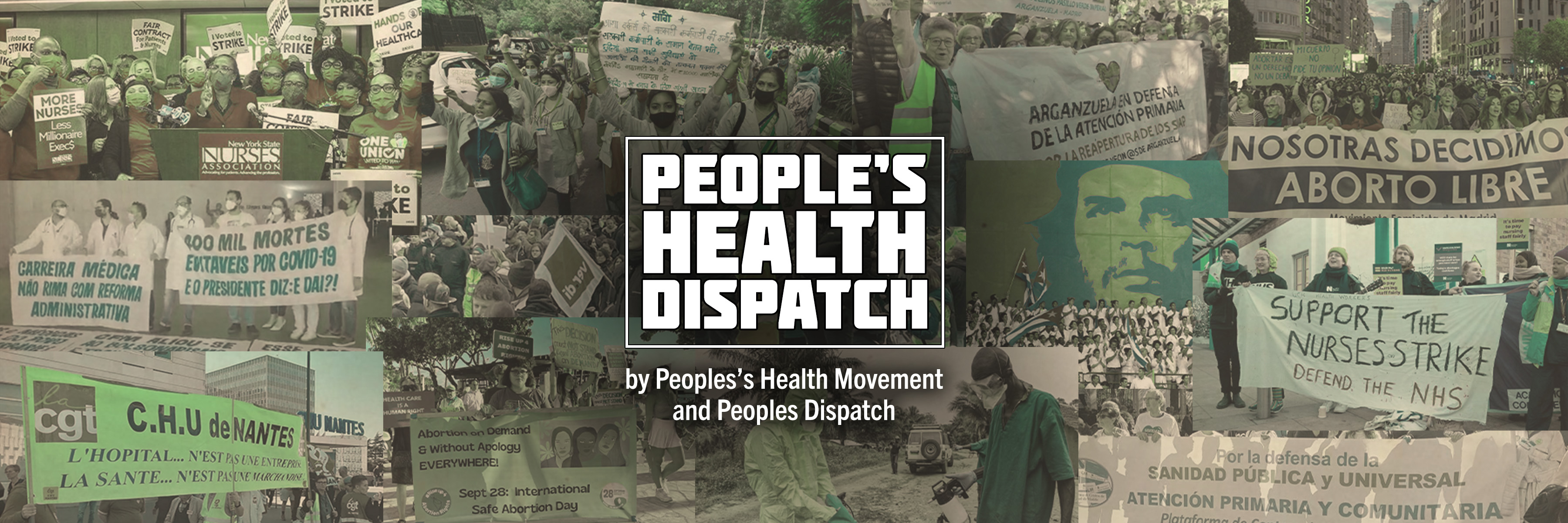
The latest bulletin of our sister publication is the same that we shared in the last newsletter here. Meanwhile, the World Health Assembly (WHA) Watchers’ Team in Geneva has written this informative article on WHO’s new “Economics of Health for All”. “For decades, finance ministers have viewed health spending the way homeowners view leaky roofs: a necessary nuisance, a cost to be minimized. Hospitals consume budgets. Doctors require salaries. Medicines drain foreign exchange. When economies tighten, health is often among the first cabinet ministers sent home with a smaller envelope. But a quiet revolution might be underway in Geneva, and it threatens to flip this logic on its head. Read more: https://peoplesdispatch.org/2026/02/20/economics-of-health-for-all-the-plan-to-put-health-at-the-heart-of-the-global-economy/ |
PHM Exchange,Número 8–Mayo de 2026 |
Saludos camaradas del MSP, Bienvenidos a la nueva edición de ‘PHM Exchange’, el boletín informativo del Movimiento de la Salud de los Pueblos. ¡ El PHM Exchange se envía a nuestros y nuestras activistas y colegas que se han unido a nosotros durante los últimos 25 años! Les traemos noticias de nuestros círculos y redes nacionales además del PHM de todo el mundo. Si tienen alguna noticia o evento que compartir, por favor háganlo respondiendo a este correo electrónico o enviando un correo a (mediaphm@phmovement.org) con el asunto «Para PHM Exchange», en no más de 100-150 palabras y con un hipervínculo (si está disponible), ¡y consideraremos incluirlo en nuestro próximo boletín! Para suscribirte a este boletín, haz clic a continuación y compártelo con tus amigos. https://actionnetwork.org/forms/sign-up-for-news-and-updates-from-the-peoples-health-movement Para darte de baja o actualizar tus datos, consulta el final de este correo electrónico. |
1. Aziz Rhali con la caravana terrestre hacia Gaza |
Nuestro coordinador global, el Dr. Aziz Rhali, está coordinando actualmente un equipo de personal médico que se desplaza desde países de la región del Magreb (Mauritania, Argelia, Túnez, Libia y Egipto) hacia Gaza. Aziz, quien también es miembro de la Junta Directiva de la Flotilla Global Sumud, junto con varios médicos, forma parte del convoy terrestre que se dirige a Rafah (la frontera de Gaza) para romper el asedio y entregar ayuda y servicios esenciales. El convoy terrestre se está coordinando en paralelo con el convoy marítimo hacia Gaza. La última vez que hablamos con Aziz, el 11 de mayo de 2026, el equipo del convoy terrestre había montado tiendas de campaña en Libia. Ver más: https://www.instagram.com/reels/DYUevEksHRR/ |
2. PHM en la 79.ª Asamblea Mundial de la Salud (AMS) |
Es hora de la 79.ª Asamblea Mundial de la Salud (AMS). La asamblea anual reúne a los Estados miembros de la OMS para establecer políticas y presupuestos de salud a nivel mundial. La 79.ª AMS de este año se centrará en temas como la financiación de la salud, la salud digital y el cambio climático. Únete al Equipo de Observadores de PHM y sigue los debates de la 79.ª AMS, programados del 18 al 23 de mayo de 2026 en Ginebra, Suiza. Consulta las actualizaciones aquí: Actualizaciones de PHM sobre la AMS79 Mientras tanto, el equipo de observadores en Ginebra ha escrito este artículo informativo sobre la nueva iniciativa de la OMS «Economía de la Salud para Todos» |
PHM Nepal ha establecido un nuevo Círculo Estudiantil de PHM Nepal en la Facultad de Medicina de Chitwan. El 22 de abril se organizó un programa de intercambio en el distrito de Chitwan, Nepal, en colaboración con la Facultad de Medicina de Chitwan. Asistieron alrededor de 70 participantes, entre ellos estudiantes de salud, miembros del cuerpo docente y otras personas. El programa se dividió en dos partes. La primera mitad consistió en una sesión de intercambio sobre PHM, que incluyó sus antecedentes históricos, su estructura organizativa y sus acciones en diferentes sectores de la salud. La segunda parte se centró en debates sobre el círculo estudiantil recién establecido: su relevancia, estructura y posibles actividades. Los participantes se sintieron muy motivados para participar en las actividades de PHM. Este círculo puede considerarse uno de los resultados de la Universidad de Salud Pública de Nepal (NPHU) celebrada el año pasado. Uno de los participantes de la NPHU Nepal fue un miembro del cuerpo docente de la Facultad de Medicina de Chitwan quien tomó esta iniciativa. |
4. Dos declaraciones de MSP Argentina |
El Movimiento Popular por la Salud de Argentina se opone a los cambios propuestos a la Ley de Glaciares de Argentina La declaración del Movimiento Popular por la Salud de Argentina se opone firmemente a los cambios propuestos a la Ley de Glaciares de Argentina, argumentando que debilitan las protecciones ambientales y permiten actividades extractivas dañinas como la minería en regiones glaciares. Advierte que esto amenaza las fuentes de agua, los ecosistemas y el derecho al agua, especialmente durante la crisis climática y la creciente escasez de agua. El movimiento vincula estas reformas con la explotación corporativa, la pérdida de soberanía nacional y patrones más amplios de injusticia ambiental. También critica la participación de la empresa israelí de agua Mekorot, acusándola de complicidad en la negación del acceso al agua a los palestinos. Leer más: https://docs.google.com/document/d/1RoBuCs31PoVrhJr9Dxx9kb9U_zc0pgQc/edit?usp=drive_link&ouid=114742663530310613789&rtpof=true&sd=true Turismo, extractivismo y la lucha por el territorio mapuche El Movimiento de Salud Popular de Argentina condena la violencia y la intimidación que sufren las comunidades mapuches de San Martín de los Andes que defienden el cerro Chapelco y sus tierras ancestrales. La declaración sostiene que décadas de turismo extractivo han dañado la biodiversidad, las fuentes de agua y el equilibrio ecológico esencial para la vida y la salud de los mapuches. Critica a las empresas y a los gobiernos locales por tratar el territorio como un recurso económico, dejando tras de sí la destrucción del medio ambiente y la escasez de agua. Expresa su solidaridad con su resistencia y pide la protección del Wallmapu, el territorio ancestral mapuche, y la defensa de la vida y la integridad ambiental. Leer más: https://docs.google.com/document/d/12xFIEuhHP_OmI5uh5HSvTxrNAPLFbMnE/edit?usp=drive_link&ouid=114742663530310613789&rtpof=true&sd=true |
5. Acabar con la complicidad médica: Boicot a la Asociación Médica Israelí |
Ya está en línea la página de la campaña de PHM que pide la suspensión de la Asociación Médica Israelí de la Asociación Médica Mundial. Esta campaña se lleva a cabo conjuntamente con Doctors for Gaza / Artsen voor Gaza y el Consejo Asesor de Salud de Jewish Voice for Peace (JVP-HAC). Si desean unirse a la campaña, conectense con otras personas en su país o participen en el grupo de trabajo, contáctandose a: [email protected] Leer más: https://phmovement.org/end-medical-complicity |
6. Seminario web del PHM Asia-Pacífico: « Bases militares estadounidenses: ¿protección o contagio?» |
Los ataques liderados por Estados Unidos e Israel en Oriente Medio, especialmente en Irán, el Líbano y Palestina, han provocado una destrucción masiva en la región, pero también han sacudido al mundo debido a la crisis del petróleo y la energía que han desencadenado. Y el temor que ahora tiene la población es: con el conflicto en curso y la agresión de Estados Unidos en América Latina, ¿quién será el siguiente? Aunque se encuentra a una buena distancia del centro del conflicto, la región de Asia-Pacífico siempre ha sido un escenario de maniobras tácticas por parte de las potencias imperialistas, en particular, Estados Unidos. Solo en los territorios del Indo-Pacífico hay numerosas bases militares controladas por Estados Unidos. Se utilizan para vigilar la región, como ubicaciones estratégicas para el reabastecimiento de suministros, zonas de atraque para sus tropas y, posiblemente, plataformas de lanzamiento para el uso de la fuerza contra otros… Leer más: https://phmovement.org/webinar-us-bases-protection-or-infection Fecha y hora del seminario web: 20 de mayo de 2026, de 10:00 a. m. a 11:30 p. m. UTC (de 6:00 a 7:30 p. m. hora de Singapur, de 8:00 a 9:30 p. m. hora de Melbourne, de 3:30 p. m. a 5:00 p. m. hora de la India) Inscripción en Zoom: https://us06web.zoom.us/webinar/register/WN_th_lHLl6Spam7mQcZd8agw |
7. «La escasez de medicamentos y la lucha política —y electoral— en Colombia» |
Compartimos este artículo de Jennifer Cardona, coordinadora de PHM Colombia y miembro del Consejo Directivo de PHM. El artículo sostiene que la escasez de medicamentos en Colombia es un problema tanto político como logístico. Afirma que la escasez está relacionada con los conflictos en torno a la reforma sanitaria propuesta por el presidente Gustavo Petro. Los autores sostienen que los intereses de la salud privada y la industria farmacéutica se resisten a las reformas que fortalecerían el control público y el acceso universal. En general, el artículo presenta la crisis como parte de una lucha más amplia sobre si la salud debe funcionar como un derecho público o como un sistema impulsado por el mercado. Leer más: https://phmovement.org/medicine-shortages-and-political-and-electoral-struggle-colombia |
El último boletín de nuestra publicación hermana es el mismo que compartimos en el último boletín informativo aqui. «Durante décadas, los ministros de finanzas han visto el gasto en salud de la misma manera que los propietarios ven los techos con goteras: una molestia necesaria, un costo que hay que minimizar. Los hospitales consumen presupuestos. Los médicos requieren salarios. Los medicamentos agotan las divisas. Cuando las economías se contraen, la salud suele estar entre los primeros ministros del gabinete en ser enviados a casa con un presupuesto más reducido. Pero podría estar en marcha una revolución silenciosa en Ginebra, y amenaza con dar un giro completo a esta lógica. Leer más: https://peoplesdispatch.org/2026/02/20/economics-of-health-for-all-the-plan-to-put-health-at-the-heart-of-the-global-economy/ |
With your help, we will fight for health justice, against the commercialization & commodification of health, and against health inequalities. We believe in health for all, driven by the people. Become a health activist, join, and contribute to the People's Health Movement by clicking below. Con tu ayuda, lucharemos por la justicia sanitarua, contra la comercialización y mercantilización de la salud, y contra las desigualdades en materia de salud. Creemos en la salud para todas y todos, impulsada por las personas. Conviértete en activista de la salud, únete y contribuye al Movimiento por la Salud de los Pueblos haciendo clic a continuación. |
|