
PHM-G2H2 Policy Dialogue: Taking Stock of the Draft Global Plan of Action for Indigenous Peoples’ Health
PHM and G2H2 warmly invite you to join an online policy dialogue. The dialogue will take place online on Monday, 19 January, from 13:00 to 14:30 (CET).
Register here: https://us02web.zoom.us/webinar/register/WN_axVictEgRnWfyIXUjHulGw#/registration
English-Portuguese (BR) interpretation available
At the forthcoming EB meeting the Draft global plan of action for the health of Indigenous Peoples will be tabled for discussion by member states. This session is aimed at critically reflecting on the contents of the draft plan, and identifying how far this plan goes in realising the vision set out in Resolution 76.16. This resolution recognises numerous rights of indigenous’ peoples, including their rights to the enjoyment of the highest attainable standard of physical and mental health, affirms the legitimacy of their own representative institutions, and emphasises the importance of obtaining their free, prior and informed consent before adopting and implementing legislative or administrative measures that may affect them. Does the Draft Global Plan create a framework that can realise these rights and address the structural drivers of the poor health outcomes suffered by Indigenous Peoples?
Speakers:
Alia El-Yassir, Director of the Department for Gender, Rights, Equity and Sexual Misconduct Preventionb to outline the core objectives, priorities, and guiding principles of the Draft Global Plan of Action, and where it currently stands in the WHO decision-making process
From a human rights perspective, what are the most critical areas where feedback from Indigenous Peoples, civil society, and Member States is still needed before the GPA is finalised at WHA80?
Government / Member State perspective
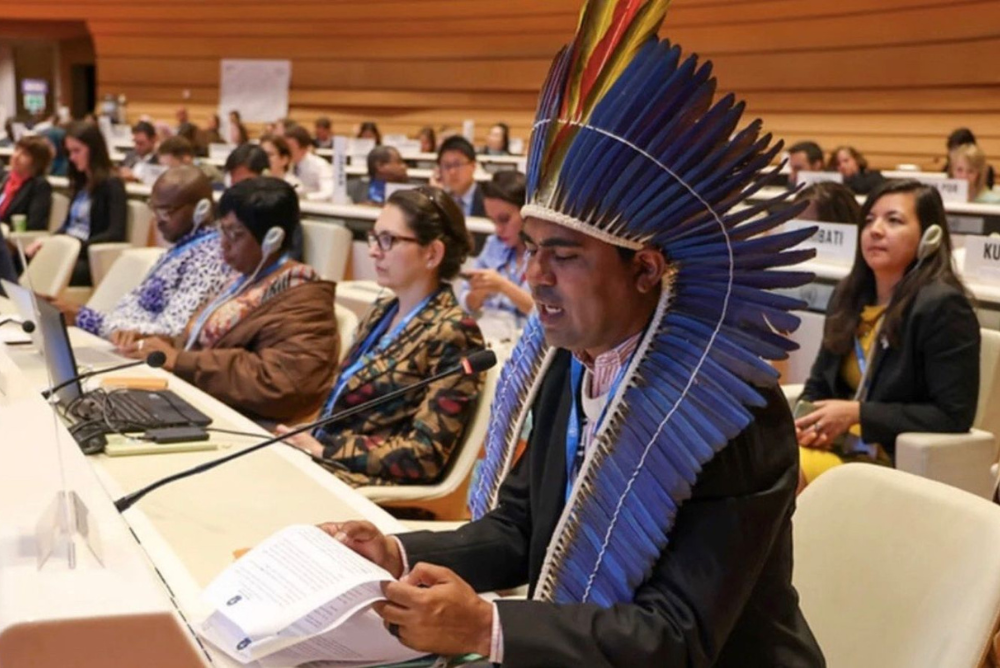
Putira Sacuena, indigenous person from the Baré People, director of the Department of Primary Health Care for Indigenous Peoples, linked to the Secretariat of Indigenous Health of the Ministry of Health.
Drawing on Brazil’s experience in advancing Indigenous Peoples’ health policies and its role in shaping the UN Declaration, what key lessons should inform the ambition and priorities of the Draft Global Plan of Action?
How should the GPA address the structural drivers of Indigenous health—such as the protection of land and water from mining, agribusiness, and extractive investment—and what financing and governance mechanisms are needed for Member States to act on these determinants in practice?
Movement & country experience
Dr Vivian Tatiana Camacho Hinojosa, Bolivian Indigenous Leader, PHM (confirmed)
From the Bolivian experience, what concrete gains and gaps do you see in government efforts to recognise and improve Indigenous Peoples’ health, beyond a narrow focus on medicines or services?
Does the Draft GPA adequately reflect the realities, knowledge systems, and priorities of Indigenous communities on the ground, and what changes are needed to make it truly responsive?
International professional association
Tido con Schoen-Angerer : President, Traditional, Complementary and Integrative Healthcare Coalition (TCIH Coalition), Geneva (confirmed)
How does this broader issue of Indigenous Health in the GPA relates to the Traditional Medicine strategy and is there a sufficient engagement with that in the draft GPA?